Featured Attractions

Showing posts with label #DisneyDeepDive. Show all posts

Sunday, October 13, 2019

Disney Deep Dive: Walt Disney World, Part 5


Sadly, Walt Disney would only visit Walt Disney World’s actual site once before passing away in 1966. His original plans for EPCOT would be scrapped, never to see the light of day. In actuality, the only part of the project that was kept was the location of the Magic Kingdom theme park- at the back of the project site.


Scrapping Walt Disney’s original plans changed the project from a utopia into a “Vacation Kingdom” which didn’t solve any of the problems that Walt Disney saw in Anaheim; it just pushed them further away. Orlando proved to be no better than Anaheim at zoning and in many respects was much worse. Roy Disney’s conservative approach in building hotels opened the door for the leeches to spring up around Walt Disney World just like they had at DISNEYLAND. 


The only thing that Roy Disney chose to “supersize” was the Magic Kingdom’s castle. Walt Disney favored a smaller castle because he felt that only tyrants built large castles to intimidate their subjects. Roy wanted to show the world that his company had grown exponentially since 1955 and could afford to build a larger castle. 

In 1971, the Magic Kingdom park opened to less than expected crowds. Walt Disney’s imagineers, who had hated Roy Disney’s changes, believed the Resort was cursed by Walt Disney. The site as built would have been unrecognizable to Walt. Several months went by with few paying customers actually showing up. For a time, Roy Disney thought he had sunk the company. Lucky for him the crowds did show up- eventually.


Thursday, October 10, 2019

Disney Deep Dive: Walt Disney World, Part 4


As Walt Disney began the planning process for what had started to be referred to as “Disney World”, he and Roy were heading for another huge conflict. While Roy wanted to concentrate on the planning and construction of “Disneyland East”, Walt Disney was concentrating on EPCOT. Roy still hoped to convince his brother that EPCOT would bankrupt the company and should be scaled back if not completely canceled. Walt, on the other hand, ordered his Imagineers to work on EPCOT and saw the theme park as something that could come later. He had instructed his staff to just copy DISNEYLAND but include “more water.”


When Mr. Disney announced his new project on television, his audience was confused. What was this EPCOT? Was it another theme park like DISNEYLAND? This confusion would work to the company’s advantage nearly twenty years later. But in 1965 it was just confusing. Walt Disney figured he would have plenty of time to explain it all in the years leading up to EPCOT’s eventual unveiling. His guests would see that EPCOT was no theme park; it was going to be a prototype city whose concepts could be taken home and used to enhance cities around the world.


Before that could happen, however, the unthinkable happened. Walt Disney would pass away on December 15, 1966. His brother would “honor” his memory by throwing out all of his plans for EPCOT and building a “Vacation Kingdom” in Florida. Roy claimed that the resort would be called “Walt Disney World” to forever honor the man who made it all possible. If the company had wanted to be more honest about whose vision was reflected in the sprawling resort the place should have been called “Roy Disney World”.


Wednesday, October 9, 2019

Disney Deep Dive: Walt Disney World Origins Part 3


When Walt Disney first approached his brother about building another DISNEYLAND, Roy Disney was instantly receptive. He had previously fought against the original DISNEYLAND and was the first person to admit he had been wrong about the project’s profitability. DISNEYLAND had been an excellent investment and had given the company a stable source of income that it had never been able to achieve by just producing motion pictures.


Roy’s approval was short lived when Walt told him that what they were calling “Disneyland East” was just a way to get visitors down to Florida. The biggest project (and thus the biggest expense) would be EPCOT, a real city where real people would live. Roy hated the idea and began trying to talk his brother out of it. The company still owned about fifty acres north of the DISNEYLAND Hotel; couldn’t Walt and his imagineers come up with something to build there? Roy even arranged for Walt to meet with MCA Chairman Lew Wasserman, who warned Walt Disney about the problems he was dealing with as a result of Universal City being its own governmental entity. Roy even began buying up surrounding property in Anaheim to see if that might encourage his brother to shelve his plans for EPCOT. 


Roy eventually relented and plans for “Disneyland East”, complete with the real city of EPCOT were announced to the world. Roy encouraged the imagineers to focus on “Disneyland East” first, though his brother was uninterested in the park. He already had a perfect design in Anaheim; Walt was concentrating his efforts on EPCOT. Roy hoped to change his brother’s mind about EPCOT’s feasibility eventually, but for now it was full speed ahead.


Tuesday, October 8, 2019

Disney Deep Dive: Walt Disney World


After DISNEYLAND became a phenomenon, the world came to Anaheim to see Walt Disney’s amazing Magic Kingdom. From the looks of the surrounding area, they might have thought they’d made a wrong turn. Despite Walt Disney’s requests, the City Of Anaheim didn’t seem to care about how the area around DISNEYLAND looked like. Tawdry motels and tourist trap businesses sprung up across the street from the The Magic Kingdom. Incompatible housing was built behind the DISNEYLAND Hotel. Despite all of this, the park’s visitors clamored for their own DISNEYLAND back home. Initially, Walt Disney declined to build another DISNEYLAND-Style theme park. As the years went on he began to change his mind due to his dissatisfaction with the City of Anaheim’s loose zoning laws.


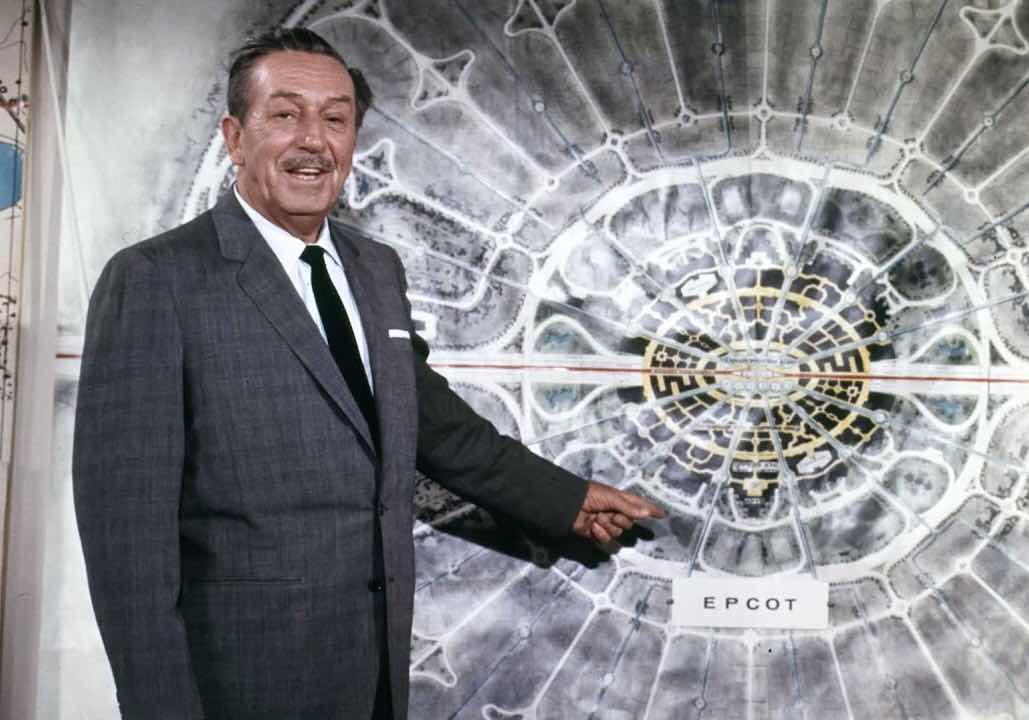
It wasn’t Walt Disney’s desire to build a bigger theme park or resort that made him change his mind about building another DISNEYLAND; he wanted to build a model city that could inspire city planners to do a better job of zoning and building out their cities. It wasn’t just Anaheim that had dropped the ball with zoning; the problems that Walt Disney saw just outside the Magic Kingdom’s gates were seemingly endemic around the world. His Experimental Prototype Community Of Tomorrow (EPCOT) would be a real city where real people lived, NOT a theme park. Mr. Disney realized that it would be a tough sell to attract guests to see a real city, so he had to include something that they would want to see- another DISNEYLAND.


So Walt began looking for a location that was far enough from DISNEYLAND that it wouldn’t leech off business from the original park and would allow for year round operations. He settled on the state of Florida.


Monday, October 7, 2019

Disney Deep Dive: Walt Disney World


While Walt Disney World in Florida often gets much of the attention these days when The Walt Disney Company talks about its theme parks and resorts, when it comes to books and documentaries most of the attention is focused on DISNEYLAND. While DISNEYLAND’s milestone anniversaries are always marked with a flood of new books, collectibles and deluxe box sets, Walt Disney World’s milestones are often overlooked. Even this site has been guilty of focusing on Walt Disney’s Magic Kingdom in Anaheim to the exclusion of Disney World in Florida.

So what would explain this disconnect? It is undoubtedly due to the fact that DISNEYLAND Park was Walt’s pride and joy, the only park that he completely designed from start to finish. Its rich history and development make it a fascinating subject to study. It only exists because of the will of Walt Disney. Walt Disney World, on the other hand, was more of an afterthought in the mind of Walt Disney. It is a theme park whose only reason for existence is that Walt Disney needed something to attract people to visit his Experimental Prototype Community of Tomorrow, a project that was never actually built as designed by its founder.
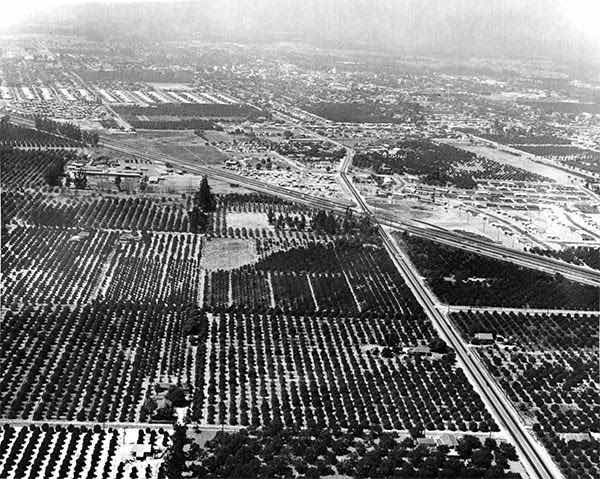

While DISNEYLAND can trace its history back to Walt Disney’s own childhood, Walt Disney World’s history can be traced back to the development of DISNEYLAND. Walt Disney raised every last penny he could and planned to spend it all on his Magic Kingdom. After determining the ideal location, Walt Disney bought up as much land as he could- about 260 acres in Anaheim, California. When he realized that he didn’t have enough money to build the DISNEYLAND Hotel, he began lobbying his wealthy Hollywood friends. Even if they wouldn’t invest in his park, he suggested that they purchase some of the adjoining land, which they could sell back to him in the future at a tidy profit once DISNEYLAND took off. None of them took him up on the offer.

When Walt Disney realized that he wasn’t going to have much, if any, control over the area surrounding DISNEYLAND, he implored the city of Anaheim to enact stricter building codes and zoning around the park so that desirable, compatible development would spring up around the park. Anaheim would sadly take none of his recommendations; in fact, it appeared that they would approve practically any building as long as it didn’t fall down. While DISNEYLAND was perfectly planned and designed to be a reassuring oasis from the real world, the area around the park became a tacky mess filled with incompatible zoning, gaudy neon signs and ugly utility poles. Mr. Disney looked on helplessly as his guests had to pass a tacky mess to get to his park.


It was this mess, along with the civil unrest of the 1960’s, that made Walt Disney think about how these problems could be solved. He had long resisted the endless appeals to build another DISNEYLAND, but as he thought about how to solve the environmental and civic challenges faced by cities at the time, he hit upon an idea that he thought could serve as a model to the world on how to create better cities. He just needed something that could attract people to see his ideas- possibly another DISNEYLAND.




Friday, August 23, 2019

Deep Dive Rewind: Mary Poppins, Part Five


After a short delay due to Julie Andrews’ pregnancy, filming on Mary Poppins began. The film would use state of the art technologies to bring the magical world of Mary Poppins to life. While the shoot itself was a breeze when the scene didn’t have special effects, some of the technology caused huge issues with the cast. For example, the picture used an audio animatronic bird that required Julie Andrews to wear heavy cables under her costume. Needless to say, she was not very happy about it.


Many of the special effects used in Mary Poppins were devised by Disney Legend Ub Iwerks. If you recall Disney history, that name should ring a bell. Ub Iwerks was the only animator who stayed with Walt Disney after Oswald was taken by Universal Pictures and animated the earliest Mickey Mouse cartoons. Mr. Iwerks was made a partner in the business, owning a third share of Walt Disney Productions. When Walt Disney’s second distributor tried and failed to steal the Mickey Mouse copyrights, he convinced Ub Iwerks to jump ship and go out on his own. Mr. Iwerks cashed out his shares for $4,000, devastating Walt Disney who could barely afford to buy him out. (That stake would be worth about $60 Billion today.) After his solo efforts failed, Ub returned to Disney on the condition that he not be asked to work in the animation department. Walt Disney let Ub work on his own projects, which laid the groundwork for the special effects used in Mary Poppins.


The production completed, the film would go into post production to incorporate Ub’s special effects with the live action footage. Walt Disney was nervous about how the public would receive the picture. Would the film be worth the Herculean effort he put into making it?


Mary Poppins would be huge. Not only would it become beloved by the public, it would be critically acclaimed, winning Oscar nominations in the major categories, winning for Best Actress, Best Original Song and in technical categories. The financial windfall would be put to good use by Walt Disney, who would invest some of the company’s profits into DISNEYLAND, adding new attractions that are still enjoyed today. (The division charged with designing and building these attractions was named MAPO after the film.)


The years have further cemented the film’s legendary status. Its stars have been immortalized at the Magic Kingdom; Julie Andrews became an honorary DISNEYLAND Ambassador and had a horse at King Arthur’s Carrousel named after her. Dick Van Dyke has been honored at the park’s Jolly Holiday Bakery, which is itself a tribute to the film. Mary Poppins continues to be loved and watched by millions the world over.


Thursday, August 22, 2019

Deep Dive Rewind: Mary Poppins, Part Four


After the drama with P.L. Travers subsided, Walt Disney set about building his cast. He was certain that he had found the only person he felt should play Mary Poppins- Julie Andrews. Ms. Andrews had actually been discovered by another Disney Legend- DISNEYLAND’s Wally Boag. Mr. Boag has been performing in England when he invited a young and shy Julie Andrews to the stage. She dazzled the audience with her singing and by 1962 was performing on Broadway.


There was one problem, however. Ms. Andrews was performing in My Fair Lady at the time and was being actively recruited for the part. She agreed to do Mary Poppins, but only if she wasn’t offered the role of Eliza Doolittle. As fate would have it, Audrey Hepburn would get that role and Julie would gratefully accept the role she was seemingly born to play.


Dick Van Dyke was probably an odd choice for Bert, considering he was American and seemingly would have an issue with the accent, but Walt Disney had seen him on The Dick Van Dyke Show and felt that his everyman persona would help introduce the audience to the magical world he intended to produce on screen.


The rest of Cast was all British- Mr. and Mrs. Banks were David Tomlinson and Glynis Johns and the Poppins Kids by Karen Dotrice and Matthew Garber.


With the cast in place, filming would begin entirely on a soundstage at The Walt Disney Studios in Burbank. 

Wednesday, August 21, 2019

Deep Dive Rewind: Mary Poppins, Part Three


Mary Poppins went into pre-production with the Sherman Brothers, Don DaGradi and Walt Disney brainstorming ideas. After about a month, Mr. Disney flew Ms. Travers in from England to join the pre-production process. That’s when the sparks began to fly.


Ms. Travers’ participation at this point in the production process was unheard of in Hollywood. Most of the time the authors who license their books to Hollywood do little more than cash the sizable checks they receive. Hollywood sees the authors as knowing little about how a film is made and more often than not sidelines them in favor of more seasoned screenwriters. In cases where the author gains the right to submit the first draft of the script, the studios will often discard the script by default. Ms. Travers was given unprecedented access to the production process at its earliest stage.


Many people have criticized the 2013 film Saving Mr. Banks for “smearing” the name of P.L. Travers by portraying her in a negative light. While the movie did take some liberties- the movie depicts Walt Disney hosting Ms. Travers at DISNEYLAND when it was Don DaGradi who took her to the park- it actually softened her abrasive attitude. Richard Sherman has said that the depiction of Ms. Travers in the film made her seem much nicer than she actually was. The proof is in the recordings made of their intense sessions with her. Ms. Travers criticizes the songs, voices her strong opinions and seems to have vastly different ideas of how the film should be. The sessions were recorded so that they could refer back to them after P.L. returned to England, but they ended up proving that the author seemed to have little patience for these Hollywood types and their eccentric (to Ms. Travers) boss. Richard has voiced the opinion that his experience on the pre-production end of the film was more stressful due to Ms. Travers. 

Eventually, this part of the pre-production ended and Ms. Travers flew back to London. She didn’t leave on the best of terms and still expressed doubt that they were on the right track with the picture. While she still provided written notes now and then, the next time she would be back in Hollywood would be for the grand premiere.

Tuesday, August 20, 2019

Deep Dive Rewind: Mary Poppins, Part Two


With P.L. Travers on board, Walt Disney set about arranging his production team. Prior to Mary Poppins, Walt Disney and his animators would storyboard a feature and determine where the songs should go. At that point, the studio’s songwriters would be brought in to work on the music. They were told what the song should convey and how it should fit into the film.


For Mary Poppins, Walt Disney wanted to change the process. He wanted the songwriters to be involved from the very beginning so that the music would be fully integrated into the picture. This would involve the hiring of full time staff songwriters, which was becoming a rarity in Hollywood. After the collapse of the studio system, most of the studios had shed their full time staff. Walt Disney Productions, on the other hand, had so many musical projects in the hopper that it still had staff writers- Richard and Robert Sherman to be exact.


Richard and Robert Sherman were the sons of legendary song writer Al Sherman. Despite their father’s discouragement, they decided to join the family business and become song writers. They mostly wrote bubblegum songs, which caught the attention of Tutti Camarata, who hired them for DISNEYLAND Records. Tutti had been tasked with turning Annette Funicello into a pop star and he felt the Shermans could do the job, as well as write other songs that might be required for the label. Annette’s string of hits caught the attention of Walt Disney, who offered “the boys” the chance of a lifetime- to write the music and songs for Mary Poppins. The brothers were surprised; not only did Walt Disney apparently know who they were (they hadn’t had much direct contact with him up to this point) he also entrusted them with a massive film project that was near and dear to his heart. They had never undertaken such a project before, but they could hardly say no to Walt Disney. They eagerly accepted this new challenge.


When it came to scripting the action, Walt Disney selected the person at his studio who he felt was the best at script and story writing- Don DaGradi. Don was asked to work with the Sherman Brothers to craft a fully realized story that was completely integrated with the music and songs. While Don knew he was fully up to the challenge, he would have to do some on the job training with the Shermans to get them up to speed on what was required for a movie script and how their songs could become an indelible part of the final picture. The biggest challenge, however, would be working with the strong willed P.L. Travers. It would be an experience nobody involved would ever forget.

Monday, August 19, 2019

Deep Dive Rewind: Mary Poppins, Part One


Mary Poppins is considered to be one of Walt Disney’s greatest films, however the film didn’t have an easy path to production. When Walt Disney began his effort to make the film, his daughters were young children. By the time the picture was released, his daughters had children of their own. Along the way, Walt would face his biggest challenger yet- P.L. Travers, the author of the famed Mary Poppins books.


The saga began when Mr. Disney’s daughters were quite young. The book they loved to have read to them at bedtime was Mary Poppins and once they realized that their father was the Walt Disney, they asked him to turn their favorite book into a motion picture. Mr. Disney promised that he would and quickly made an offer to acquire the rights from the author of the book- P.L. Travers.


Despite the extremely British setting of her books, P.L. Travers was born and grew up in Australia, moving to England as an adult. Ms. Travers was known as a blunt perfectionist; a less kind version of Mary Poppins. When she was first approached by Mr. Disney, she quickly declined his offer. She didn’t want Mary to be a cartoon character and when he first approached her, Disney was only producing animated films. World War II would intervene and Walt Disney had other worries to deal with, so the project would take a long rest. After the war, England would try to rebuild itself by freezing foreign assets, including those of Walt Disney Productions. If Disney wanted to do anything with its British earnings it would have to make pictures in England. Walt figures this would be an excellent opportunity to ask Ms. Travers to purchase the film rights again.


Prior to this time, Disney hadn’t produced a fully live action film yet and Ms. Travers was still reluctant to entrust Mr. Disney with Mary Poppins. Walt Disney Productions would eventually begin producing live action pictures, but it would also find itself extremely busy throughout the 1950’s, with numerous television shows, DISNEYLAND and a full slate of pictures. By the end of the decade, fate would finally intervene; Walt Disney would be ready to make the film and Ms. Travers would find herself in diminished circumstances. She finally agreed to sell the movie rights to Walt Disney provided that she be given unprecedented access to the pre-production process. Walt Disney enthusiastically agreed.

Thursday, August 15, 2019

Deep Dive Rewind: The Nightmare Before Christmas, Part Four


Disney had brought its prodigal son back to produce whatever he wanted. When he decided to produce a stop motion film, Disney was overjoyed that maybe this could be a way for it to bridge the gap between Aladdin and The Lion King. Disney Pictures chairman Jeffrey Katzenberg had even publicly stated that he hoped the film could help lift the studio’s stodgy reputation.


At practically the last minute, however, the company got cold feet. This film was too macabre. Too stark. Too scary. Like Who Framed Roger Rabbit and Dick Tracy before it, the film was sent to theaters with the more adult Touchstone Pictures brand on it. An odd choice, considering that the company had already regretted doing that to WFRR. By 1993, Roger Rabbit had already been welcomed into Walt Disney’s Magic Kingdom with his very own attraction. Jack Skellington would be similarly exiled. 


Without the Disney name, the studio put minimal effort behind promoting the film. Instead of a traditional Thanksgiving Weekend release, the film would premiere days before Halloween with a muddled promotional push. Early trailers referred to the film as being from Walt Disney Pictures, but viewers looking for the latest Disney film were greeted with the Touchstone logo. The shift in marketing allowed some toy licensees to drop out while others hastily covered the Disney logo with Touchstone Pictures stickers on the packaging.


The film would be a modest success, but wouldn’t be a Lion King sized success. The merchandise would fail to find very many buyers and the film would soon make its way to the Disney vault, destined to become just a trivia question. Disney might have had little faith in the picture, but its fans wouldn’t let it just disappear. The film gained a massive fan community in the years after its release. By 1998, dolls based on the character Sally that had languished on clearance shelves in early 1994 were fetching $800 on eBay. Disney obviously took notice. Small amounts of Nightmare Before Christmas merchandise were produced for Disney Theme Parks and were eagerly snapped up. Licensees lined up to produce even more merchandise for sale. Most films sell the bulk of their merchandise during their initial release. Jack and the gang were selling 20 times more merchandise than they did in 1993 seven years after the film came out.


Disney would make up for lost time. In 2001, Jack Skellington would take over DISNEYLAND’s Haunted Mansion for both the Halloween and Christmas seasons. Despite the huge drop in tourism that year, Jack’s takeover would be a huge success. Florida’s Magic Kingdom ordered its own version and The Magic Kingdom at the Tokyo Disney Resort wanted one too, but initially had to wait. When Florida canceled the overlay, Tokyo eagerly jumped at the chance to add a little madness to its Haunted Mansion. Both seasonal overlays have become cherished additions.


Who could have guessed that the little project that Disney originally rejected would become such a huge phenomenon. Jack and his crew might not have succeeded in stealing Christmas, but they did succeed in stealing the hearts of their millions of fans.

Wednesday, August 14, 2019

Deep Dive Rewind: The Nightmare Before Christmas, Part Three


Upon his return to Disney, Tim Burton set about choosing his first project. He decided to return to his Disney roots by turning his Halloween themed short idea into a feature length stop motion film. Disney originally had cold feet. What would people think about this grim, macabre take on Christmas and Halloween? The company’s hardline would soften once it realized that it already owned the property and wouldn’t have to negotiate to acquire it from Burton.


At the time, Walt Disney Animation was experiencing a second Golden age. The Little Mermaid had ushered in this new era while Beauty and the Beast had cemented Disney’s new dominance. Disney CEO Michael Eisner had hoped to do what Walt Disney himself was unable to accomplish; release a new animated feature every year. With Aladdin opening up one year after Beauty and the Beast and The Lion King on deck for the next year, it seemed as though he would achieve this goal.


The Lion King, however, had fallen behind schedule. It would not be finished in time to meet its original November 1993 release date. The company thought that possibly The Nightmare Before Christmas would fill the void. Production on the stop motion picture, however, was going very slowly.


The actual filming took place in San Francisco, 400 miles away from Disney’s Burbank studios and its prying eyes. The studio feared that the production was going too long and that some of the film’s elements would be too scary for children, despite the fact that this film was supposed to show Hollywood and the world that Disney was willing to create and release edgier pictures. Disney’s fears would prove unfounded; the picture would be ready in time for a Holiday 1993 release. Would Disney, however, be ready for The Nightmare Before Christmas?

Tuesday, August 13, 2019

Deep Dive Rewind: The Nightmare Before Christmas, Part Two


After his firing from Walt Disney Productions, Tim decided that his future was in directing live action films. Luckily for him, his Vincent short was seen by Paul Reubens, who was looking for a director for the big screen debut of his Pee-Wee Herman character. The film was a huge success, which caught the eye of Warner Brothers executives. They quickly signed him to a contract.


The studio still had some reservations about handing over huge budgets to make some of his more eccentric projects. He began working on a script for a new take on Batman, but while encouraging him to work on the project, Warner Brothers was reluctant to hand such a big project over to him. Eager to work on something that would actually get produced, Tim found a script that had the same sort of twisted view that he liked to portray on screen. Beetlejuice was a huge hit, produced on a small budget. Warner Brothers was finally ready to hand over a huge budget and the equivalent of its Crown Jewels to Burton. His version of Batman would finally hit the big screen.


At first, Warner Brothers began to regret its decision. Tim chose Michael Keaton as his Batman, which the studio found puzzling. The fans were outraged, resulting in a drop in the studio’s share price. After Jack Nicholson was signed, the grumbling quieted. In the end, the film became a colossal hit, making hundreds of millions of dollars for Warner Brothers. When the huge merchandising push was factored in, the studio made in excess of $1 Billion off the film. This made Tim a directing superstar.


This success would not go unnoticed by anyone in Hollywood. Disney CEO Michael Eisner saw an opportunity to grab some of the success for the company. Tim’s firing had come before Eisner had joined the company, and it had been transformed since then. The company’s Touchstone Pictures division now produced the sort of films that could give Burton the freedom to fully explore his visions. Eisner took advantage of Tim’s fondness for Disney and the new freedom he would have to sign Tim to make a few projects for the studio. Warner hadn’t signed Tim to an exclusive contract, so he was free to work where he wanted. So in 1990, Tim would return to Disney. But what would his first project be? It would end up being a literal blast from the past.

Monday, August 12, 2019

Deep Dive Rewind: The Nightmare Before Christmas, Part One


These days, The Nightmare Before Christmas has become an established Halloween treat that bridges the gap between Halloween and Christmas. Who could imagine Halloween without a visit from Jack Skellington and the other denizens of Halloweentown? This beloved classic has even inspired yearly Haunted Mansion overlays at DISNEYLAND and the Tokyo Disney Resort’s Magic Kingdom Park. The film’s current success, however, was hard earned. Executives in charge at The Disney Studios were never big fans of the project and it would take Batman and ten years for the film to make it to the big screen. Join us as we trace the history of this now classic film that was initially rejected then buried by Disney. It would be the film’s fans- and their dollars- that would eventually elevate the picture to its current heights.


Tim Burton was never a normal kid. Growing up in Burbank, he was literally in The Walt Disney Studios’ backyard, but while he aspired to one day join the ranks of the studio’s artists, his tastes leaned darker and more gruesome than the squeaky clean world of Disney. Of course, while Disney’s world was never completely gumdrops and lollipops, its villains always took a back seat to the heroes and everything seemed to be either black or white. Tim, on the other hand, saw things in shades of grey.


Tim’s artistic gifts would eventually lead him to the legendary CalArts. Endowed and built by Walt Disney, the school had soared to the top of arts colleges by the late 1970’s. While it was descended from institutions that had been established decades before, it had only been established as CalArts in the mid-1960’s. It had become a reliable producer of talent for the various Hollywood studios and was a great place to begin an artistic career. Tim had produced a pencil drawn cartoon short in 1979 that caught the attention of Walt Disney Animation- Stalk of The Celery Monster. The studio would offer young Tim an apprenticeship and then a job. A few of the studio’s old guard saw Tim’s potential and regarded his different, darker style as intriguing enough to let him pursue his own projects.


One of his first productions was Vincent, a macabre stop motion short that featured a young boy, not unlike young Tim, who aspired to be just like his favorite actor- Vincent Price. At least, he aspired to be how he imagined Vincent Price to be like in real life. This novel short was unlike anything that Disney had ever released before, which rattled a few executives at the studio. Vincent Price, however, quickly signed on to narrate the film, which changed a few minds at Disney. The short was a huge success, prompting Tim to start working on other concepts for the studio.


His next big project for the studio was a Japanese-themed retelling of the Hansel and Gretel story for The Disney Channel In 1983. The bizarre live action production flummoxed studio execs. They weren’t sure what to make of it and chose to air it just once on Halloween of that year. The film was eventually shelved, never getting a home video release or even a repeated viewing on television.


Undaunted, Tim chose the macabre Frankenweenie as his next project. The featurette, which told the story of a young boy who brought his dog back to life, was the last straw. Disney executives, faced with a hostile takeover and increasing irrelevance, decided to fire Tim Burton. It was determined that the type of projects he was creating would never fit in at Disney.


Tim was devastated, especially after he learned that his next project had also been canceled. The project was deemed, like his others, to be too dark and macabre for Disney. That project was The Nightmare Before Christmas.